

There is a widespread misconception that travelling with dogs is extremely challenging, if not downright impossible. The majority of dog owners believe that they will have to fork over a substantial amount of money in order to cover the costs of dog sitting while they are away on holiday with their pets.
On the other hand, I discovered that it is possible to bring your furry friends along with you on most types of travel experiences. All it takes is some study and a little bit of additional planning, and it’s not nearly as tough as you might think it would be.
The National Pet Owners Survey for 2017–2018 found that 68 percent of households in the United States have at least one pet. That’s a rise of 56% since 1988, bringing the total number of dogs to 89 million.
And of those people who own dogs, over 37% travel with their animals at least once a year, which is a significant increase from the 19% who did so a decade ago. According to the findings of the International Pet and Animal Transportation Association, more than four million living creatures are flown around the world in aeroplanes every single year.
As a result of the travel industry being forced to respond to the increased demand, bringing your dog along on holiday is now simpler than it has ever been.
As someone who is quite enthusiastic about both canines and trips across the world, I felt compelled to relate what I’ve observed regarding the development of this new fashion while I’ve been away.
1. Don’t just suppose it’s a “no”
The number of people who holiday with their pets is growing every year, but it has taken businesses some time to catch up to this trend. As a result, many venues do not yet have policies on dogs (or their policies have yet to be thoroughly fleshed out). There have been numerous instances brought to my attention in which establishments, including as restaurants and hotels, have falsely represented themselves as welcoming canines on their own websites and/or social media pages. It is natural.
When in doubt, one should always enquire. Never make the assumption that dogs are permitted or not permitted. It is a good idea to look for a sign that says “No Pets Allowed” or a notice that says “Pet Friendly,” but regardless of whether or not a location has either of these signs, it is always smart to double-check. You can avoid a lot of wasted time, mental anguish, and physical frustration by simply sending an email or giving someone a brief call. For instance, I was taken aback to find out that dogs are permitted inside the majority of the retail malls in Rio de Janeiro, which was a wonderful surprise for me. Who would’ve guessed?
2. Get duplicates of every paperwork pertaining to your pet
You will need to have the veterinary records for your dog on hand if you intend to travel internationally or across international borders (sort of like us humans and our passports). These are essential pieces of evidence proving your pet is in good health and has received all of the recommended vaccinations. If officials request to see them, they will either keep the originals or make a copy of them, depending on who you deal with. In the event that you find yourself in a situation where you need to find a new veterinarian while travelling, you will be able to give that professional with your animal companion’s complete medical history.
For all of these reasons, I make it a point to carry numerous copies of the medical records and contact information for my dogs’ veterinarian with me at all times. This includes a digital copy stored on my phone as well as physical copies kept in the bag I carry with me during the day.
3. Download some dog-friendly software
When travelling with your dog, there are a variety of apps that can be of use to you. When I used to backpack throughout the world without my iPhone, this task was a lot more difficult for me. Among my favourites are the following:
- All Trails – This has the most comprehensive collection of trail maps available (over 50,000). You may look through images and reviews, and you can even filter your search by routes that are dog-friendly, which will tell you which treks you can take your dog on.
- Bring Fido : Bring Fido is the equivalent of Yelp for dog owners. Bring Fido is a mobile application that assists users in locating nearby hotels, activities, and restaurants that are pet-friendly.
- The American Red Cross’s Pet First Aid course — This application not only helps you find the animal hospital that is closest to you, but it also walks you through how to handle the most common types of pet emergencies.
4. Avoid paying the hotel’s high prices
There are a lot of hotels that will accommodate your pet for an additional fee. The one-time fee might be anything between $50 and $250, and the daily rate can be anywhere from $10 to $50 on average. These supplemental expenditures quickly pile up, which drives up the total cost of your holiday and puts strain on your finances. If you reserve a room at a hotel that charges a pet fee of $50 per night, the total cost of your stay will be an additional $350.
Tip :- Asking these questions before making a reservation at any hotel will help you ensure that you have a pleasant time there.
5. Put your pet in a carrier Bag
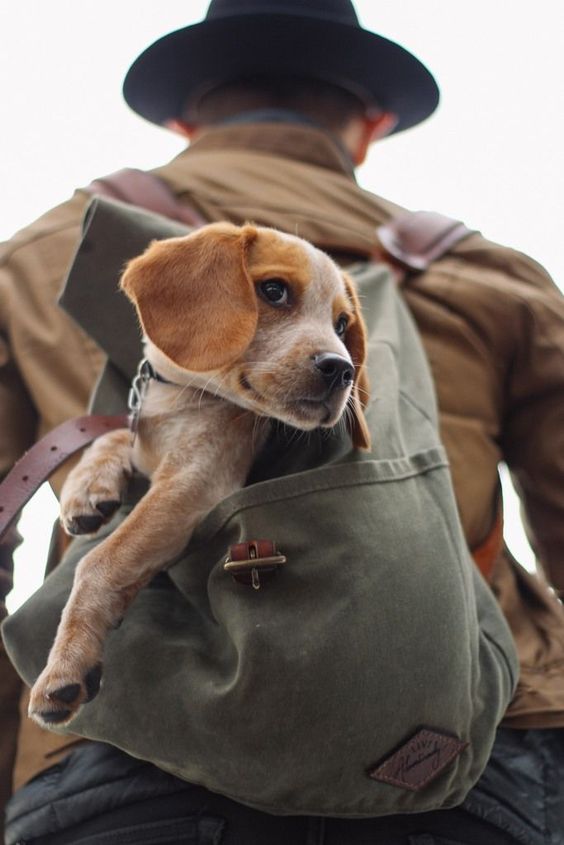
When it comes to carrying your pet, you have a lot of choices available to you on the market. One of my favourites is the k9 Sport Sack, which is a dog carrier backpack that can accommodate dogs weighing up to forty pounds. It is available in a variety of colours, and patches can be added to personalise it. In addition to that, I utilise The Roodie, which is a pet carrier sweatshirt capable of holding dogs weighing up to 15 pounds each.
6. Always treat the people you meet with kindness
Be truthful and considerate with the people you encounter wherever you travel with your dog. Your dog will appreciate it. Some individuals have a soft spot in their hearts for animals, while others can’t stand the sight of even the tiniest kitten. Always be courteous, and be aware of the capabilities of your dog.
Keep in mind that the way in which humans interact with dogs can vary greatly from culture to culture. In Guatemala, for instance, we encountered more stray dogs than we did domesticated dogs. People are frequently taken aback when they realise that our dogs ride on aeroplanes, and they are even more taken aback when they discover that they sleep in our bed. You should make an effort to be aware of these cultural variations and attentive to the human-canine boundaries that people are used to.
In addition, if your animal has a history of being hostile towards people or other canines, be sure to make that fact abundantly known to anyone who might approach. You do not want to find yourself in a predicament that could have been sidestepped with a simple cautionary note. In the end, canines are animals, and as their owners, we are the ones who are responsible for their well-being.
7. Make sure you’ve double-checked the airline’s pet policy
When we fly, especially on international flights, we always carefully check, if not triple check, the policies of the airline we are flying with regarding pets. Both the policies and the rules are consistently going through revisions and updates. You want to double check that your canine companion and you are allowed to travel on that particular airline. When I need to bring my dogs on a flight, I always make sure to confirm my reservation by checking the airline’s website, calling the company, and sending an email.
The rules and fees associated with flying with your pet can also change depending on a few other things. In most cases, they are determined by the airline, the nation to which you are flying, the breed and size of your pet, and the size of your pet’s carrier. There is also the possibility of flying in the passenger cabin, the cargo hold, or the luggage hold of an aeroplane.
American Airlines, Delta Airlines, Air France, and JetBlue are among my top picks for airlines that welcome well-behaved canine companions.
8. Start creating dog friends
Dogs are extremely social animals, as I mentioned previously. When you go for walks or spend time at the park in the neighbourhood, make friends with both other dogs and the people who walk them. They will tell you all about their favourite places to hang out, the restaurants in the region that are the most dog-friendly, and the veterinarians that they feel comfortable recommending. Dog owners are the most knowledgeable people about their pets, making them a valuable resource to have. The following is a list of the most effective techniques to locate a local dog community either online or in real life :
- Go on a walk – Take your four-legged friend and go for a stroll around the neighbourhood with some fresh air and exercise. Make sure to take a whiff or two and chat with other folks who own dogs. Talking to others who live in the area who have dogs is the most effective way to gather information about the neighbourhood and locate all of the establishments in the region that are dog-friendly.
- Instagram – These days, canines all around the world have their own own pages on Instagram. Search up hashtags such as #dogsof and specify your location when you search for them. Dogs can be found in every region of the planet. Locate some nearby kids, and then send a message to them asking for advice on what to do.
- Take a trip to a dog park – Dog parks are wonderful places to get some exercise and meet new people. These can be found in a number of the major cities. If there are no official dog parks in your region, you can ask other dog owners in your neighbourhood or individuals you meet online for recommendations on unofficial dog play areas in the area.
- Visit a local pet shop — these establishments are excellent information resources and should be visited. A lot of places will put up posters advertising local dog services or provide information on nearby dog-related activities that you and your four-legged companion may participate in together.
9. Pack the important things
There are a few things that you really have to bring along with you, despite the fact that you really just want to grab your dog and run out the door. A few examples of this include poop bags, a lead and harness, and ID badges. Bring along the necessities for your canine companion just in case you can’t find them along the way (not every town has a nice pet shop!).
The following is a list of items that you could require. This encompasses things such as:
- Food and water for the dog
- Toys that fold up like bowls
- A bed
- Treatment for fleas and ticks
- Medical records and travel documentation
Also, make sure that your dog has a microchip implanted in its body and that its vaccines are always up to date.


Leave a Reply